Tea Tree Oil for Toenail Fungus Explained
Does tea tree oil for toenail fungus actually work?
Tea tree oil for toenail fungus has modest evidence behind it. In one head-to-head trial, 100% tea tree oil gave full clearance in about 18% of people at six months, and around 60% reported partial-to-full improvement. It works gradually, suits early, mild cases, and should be diluted to avoid skin irritation.
- Genuine antifungal activity, but a minority achieved complete clearance in trials.
- Best suited to early, mild nail changes; stubborn nails need a clinician.
- Dilute in a carrier oil and patch-test; neat tea tree oil can irritate the skin.
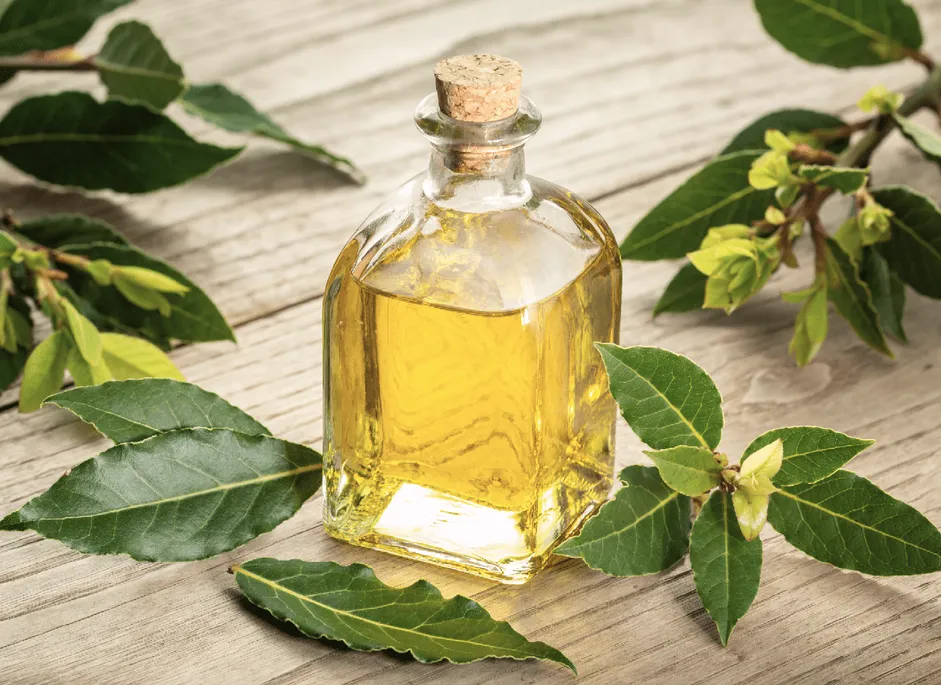
Tea tree oil for toenail fungus is one of those home remedies that sits in an awkward middle ground: too well-studied to dismiss, too weak to oversell. Search for it and you will find pages promising it dissolves fungus in weeks, and other pages calling it useless folklore. Neither is right. The truth is more useful and more boring, and it comes from actual clinical data rather than testimonials.
Tea tree oil — steam-distilled from the leaves of the Australian shrub Melaleuca alternifolia — has measurable antifungal and antibacterial activity in the lab, and it has been tested on real nails in people. That last part is what separates it from most botanical claims. It is also the fifth ingredient on the KlaroNail label, which is why it is worth understanding on its own terms before you judge any product that contains it.
The evidence on tea tree oil for toenail fungus
The reason tea tree oil for toenail fungus keeps coming up is a small but genuine body of research. The most-cited piece is a head-to-head trial that pitted 100% tea tree oil against a conventional 1% clotrimazole solution over six months. The results are the honest centre of this whole topic, so here they are without spin:
- Full cure was the minority outcome. Around 18% of the tea tree oil group had complete clearance at six months, versus roughly 11% of the clotrimazole group. In other words, most people in both groups did not achieve a full cure.
- Improvement was more common than cure. About 60% reported partial-to-full improvement — better-looking nails without necessarily reaching a clean result. That is a meaningful, if modest, effect.
- It roughly matched a pharmacy antifungal. Tea tree oil performed similarly to, and slightly ahead of, clotrimazole on full-cure rate. Neither number is impressive; they are simply comparable.
So the answer to “does it work?” is a careful yes-and-no. Yes, it has real activity and can improve the look of a nail. No, it is not a reliable cure, and the majority of people in the evidence did not clear completely. Treat it as a supportive ingredient with a fair track record, not a guaranteed fix — and be sceptical of any page that quotes the improvement figure while hiding the complete-cure figure.
How long it takes, and why
Every nail treatment shares the same speed limit, and tea tree oil is no exception. The visible nail is finished keratin; it cannot un-yellow or un-thicken. Any improvement has to grow in as clear new nail from the base, at roughly a millimetre a month. That is why the trial measured results at six months, not six weeks, and why a big toenail can take a year or more to fully grow out.
The practical consequence is that consistency matters more than the oil you choose. Daily application over months is the price of admission for any topical, botanical or pharmaceutical. If you want the full picture of what to expect and when, our month-by-month toenail fungus treatment timeline lays out where the first clear band should appear and when to reassess.
Which cases it suits — and which it does not
Tea tree oil's modest strength points to a clear best use: early, mild changes. A single nail with a little discolouration at the edge, no thickening to speak of, caught early, is where a low-strength topical has its best odds. A thin nail lets more of the oil reach the plate, and there is less damaged material to replace.
The mirror image is where it disappoints. A thick, crumbling, badly discoloured big toenail of long standing is a poor match for any topical, tea tree oil included, because the active can barely reach the infected bed and there is a great deal of nail to grow out. Those cases — and any nail that is painful, spreading, or occurring alongside diabetes or poor circulation — are a reason to see a clinician, who can confirm it is actually fungus and discuss prescription topicals or oral treatment.
Tea tree oil, already formulated for you
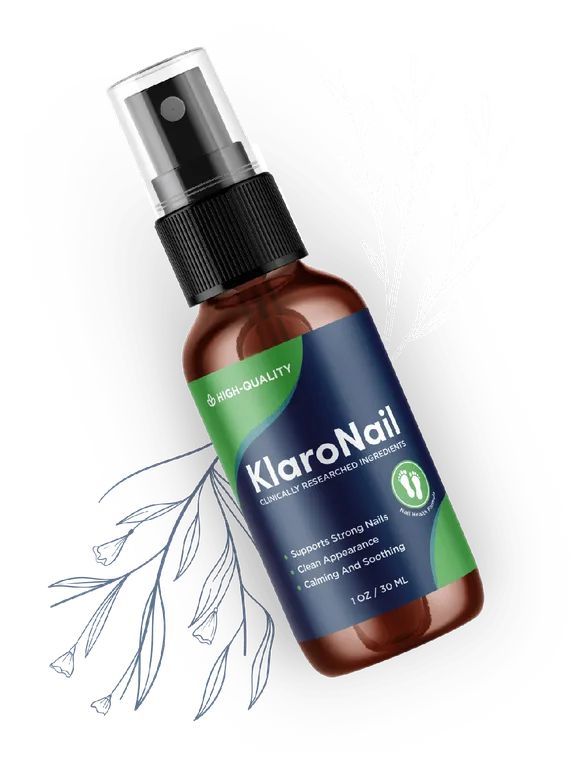
KlaroNail pairs tea tree oil with undecylenic acid at 5% and manuka in a ready-to-use cuticle spray — no measuring, no diluting — backed by a 60-day money-back guarantee.
Order NowHow to use tea tree oil safely, and why dilution matters
If you use straight tea tree oil, the biggest risk is not that it fails — it is that it irritates. Neat tea tree oil is a recognised contact sensitiser for a meaningful minority of people, and the problem gets worse as the oil ages: oxidised oil from an old, half-used bottle sensitises more readily than fresh oil. On a nail you plan to treat four times a day for months, that is not a trivial detail.
A few sensible rules make it much safer:
- Dilute it. Mix tea tree oil into a carrier such as jojoba or coconut oil rather than applying it neat. This lowers the irritation risk while still delivering the active to the nail.
- Patch-test first. Apply a small amount to the inner forearm and wait a day before you commit to using it on your feet every day.
- Keep it off broken skin. If the skin around the nail is cracked or raw, hold off — that is where irritation and stinging are worst.
- Store it well and replace it. Keep the bottle closed, cool and out of light, and do not nurse an ancient, oxidised bottle for years.
This is one quiet advantage of a finished product over a DIY bottle. In something like KlaroNail, tea tree oil is already formulated alongside carrier oils rather than sitting at 100%, so the diluting and mixing are done for you — though anyone who reacts to essential oils should still read the full ingredient list, because the same formula also contains other aromatic oils and two tree-nut oils.
Objections and myths
“It's natural, so it must be gentle.” Natural and gentle are not the same word. Tea tree oil is one of the more common essential-oil sensitisers, which is exactly why dilution and a patch test are not optional niceties.
“If it beat clotrimazole, it must be strong.” It edged clotrimazole in one small trial, but both landed in a modest range where most people did not fully clear. “Better than a weak comparator” is not the same as “strong.”
“A few weeks will tell me if it works.” It will not. A few weeks is a millimetre of new nail. Any fair judgement of tea tree oil for toenail fungus is a months-long exercise, and quitting at the six-week mark simply throws away the time already spent.
Where KlaroNail fits: tea tree with undecylenic acid and manuka
KlaroNail does not rely on tea tree oil alone. Its label leads with undecylenic acid at 5% — a castor-derived fatty acid with a long history in nail-care products and the only ingredient on the bottle printed with an amount — then lists tea tree fifth and manuka oil last among seventeen entries. The idea is a blend rather than a single hero ingredient. For the detail on that headline active, see our breakdown of undecylenic acid at 5%, the only number KlaroNail prints, and if you are comparing formulas, our look at KlaroNail versus Funginix on undecylenic acid puts the two side by side.
Two honest caveats hold here as everywhere on this site. KlaroNail is a cosmetic nail and cuticle spray — it supports the appearance of strong, clean nails — not a drug, and it is not FDA-approved to treat or cure toenail fungus or anything else. And while the label lists tea tree, manuka and the rest, it prints no amount for any of them, so we cannot tell you how much tea tree oil is in the bottle, only that it is there. Judge it as a supportive, ready-to-use botanical spray used with realistic expectations, and the evidence on tea tree oil above is the right lens for doing so.
Frequently asked questions
Does tea tree oil really cure toenail fungus?
The evidence is modest, not miraculous. In a well-known head-to-head trial, 100% tea tree oil produced full clearance in about 18% of people at six months, versus roughly 11% for 1% clotrimazole, with around 60% reporting partial-to-full improvement. That means most people did not get a complete cure. It shows genuine but limited activity, best thought of as a supportive ingredient rather than a guaranteed fix.
How long does tea tree oil take to work on nails?
Months, for the same reason every nail treatment is slow: the visible nail cannot change, so you wait for clear new nail to grow in at about a millimetre a month. In the trial that used tea tree oil, results were assessed at six months, and a big toenail can take a year or more to fully grow out. Daily, consistent use over that stretch is what any chance of improvement depends on.
Is tea tree oil better than clotrimazole?
In the one prominent head-to-head trial they performed similarly, with tea tree oil edging clotrimazole on full-cure rate and both landing in a modest range. Neither was impressive, and the study was small. The honest takeaway is that they are broadly comparable low-strength topical options, and neither replaces a doctor's assessment or prescription treatment for a stubborn nail.
Can tea tree oil irritate the skin?
Yes. Undiluted tea tree oil is a recognised contact sensitiser for some people, and oxidised oil from an old, opened bottle irritates more readily than fresh oil. Dilute it in a carrier oil, patch-test first, keep it off broken skin, and stop if redness or itching develops. In a finished product like KlaroNail it is already formulated with carriers rather than applied neat.
How should tea tree oil be diluted for nails?
Tea tree oil should be diluted before it goes on the skin to avoid irritation. It is one of the oils in the KlaroNail spray.
Give a botanical routine the months it needs
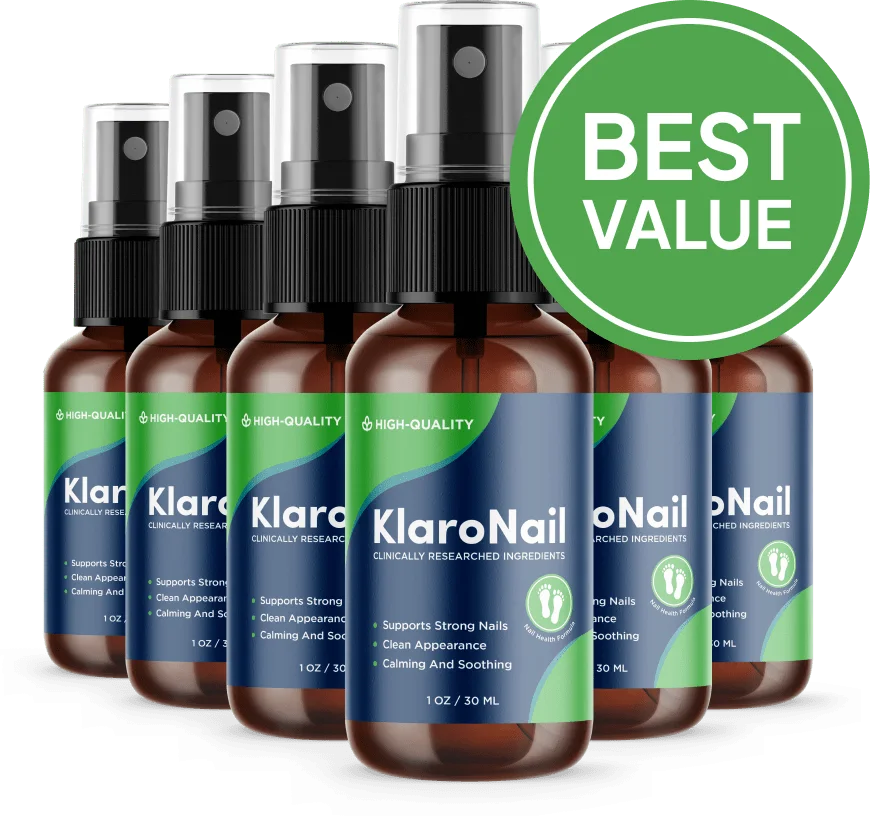
Tea tree oil is slow by nature, so a multi-bottle KlaroNail supply is what carries the routine through to any payoff — free US shipping and a 60-day money-back guarantee.
Order NowReferences
Related reading
KlaroNail vs Funginix: Comparing the Undecylenic Acid
Two undecylenic-acid topicals side by side, read off their printed labels.
Kerassentials vs KlaroNail: An Honest Comparison
How a nail oil and a cuticle spray stack up on ingredients and claims.
Undecylenic Acid at 5%: The Only Number KlaroNail Prints
What the molecule is, where it comes from, and why 5% is not a drug claim.
Manuka Oil Is Not Manuka Honey — and Six Other Things in This Bottle
The aromatic half of the formula, the two tree nuts, and what the label really says.