Manuka Oil vs Manuka Honey in This Bottle
The short version
Manuka oil is the ingredient on the Klaro Nail label, listed as Manuka (Leptospermum scoparium Oil). It is an essential oil steam-distilled from the leaves and twigs of the manuka tree, while manuka honey is made by bees from the nectar of the same plant. The label is the document to follow.
- Manuka oil is distilled from foliage; manuka honey is made by bees from flower nectar.
- Two ingredients are tree-nut derived: sweet almond oil and walnut oil.
- Three botanical names are misspelled on the printed panel, which is worth noticing.
The honey that is not in the bottle
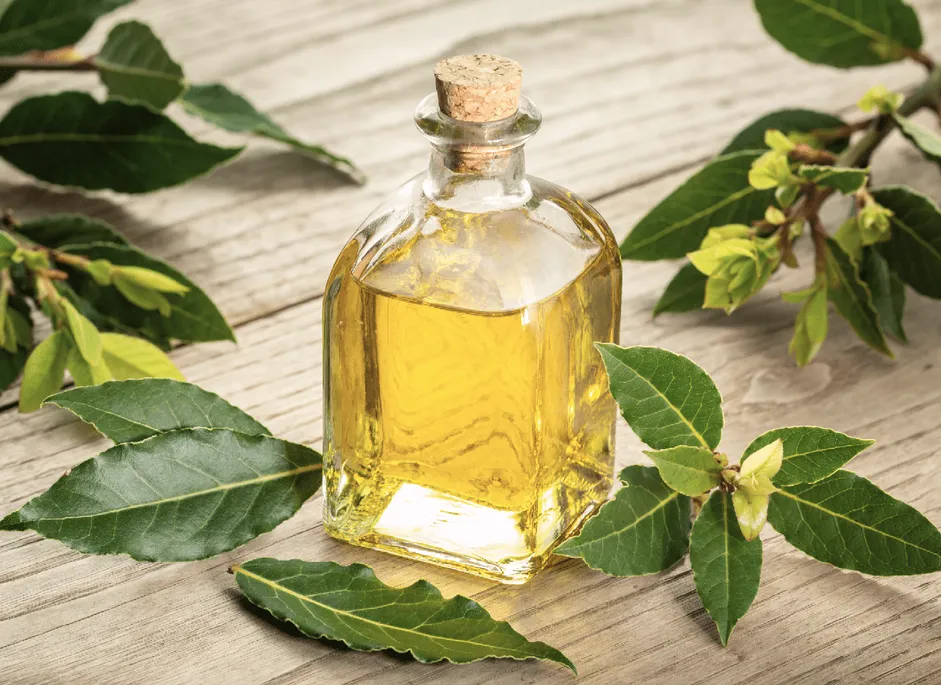
Seventeenth on the KlaroNail label is Manuka (Leptospermum scoparium Oil). On the sales page, the same ingredient is presented as “Manuka Honey”, illustrated with a photograph of a jar of honey and a dipper.
These are two different substances that happen to share a plant. Manuka oil is an essential oil, steam-distilled from the leaves and small branches of Leptospermum scoparium, a shrub native to New Zealand and south-eastern Australia. Manuka honey is a food, produced by bees from the nectar of the same shrub's flowers, and its composition — sugars, water, and the compounds bees and nectar contribute — has essentially nothing in common with a distilled oil.
A jar of honey next to an ingredient that is an oil is not a small thing on a page whose job is to tell you what you are buying. The label wins, so this site says oil, and the honey photograph is left where we found it.
The rest of the aromatic half of the formula
Seven of the seventeen entries are essential oils or aromatic compounds. None has a printed amount, and all sit below the two carriers.
- Tea Tree (Melaleuca alternifolia Oil), fifth. The oil most people associate with nail-care products, and the best-studied of the group. It is also one of the more common contact sensitisers among essential oils, and oxidised oil from an old bottle sensitises more readily than fresh — relevant on a product used four times a day for months.
- Menthol, tenth. A cooling agent. It is what makes an application feel like it is doing something, which is worth separating in your mind from whether it is.
- Camphor (Cinnamomum camphora Oil), eleventh. An aromatic counter-irritant. Camphor is one to keep away from broken skin, and no concentration is given.
- Clove Bud (Eugenia caryophyllus Oil), twelfth on the label but first on the sales page. Rich in eugenol, which is responsible for both its smell and its warmth on skin.
- Lemongrass (Cymbopogon citratus Oil), fifteenth — and one of the four that appear on the bottle but not on the page at all.
- Lavender (Lavandula angustifolia Oil), sixteenth. Near the bottom of a seventeen-item panel, which under the labelling rules is consistent with a trace.
- Manuka oil, seventeenth and last.
The two tree nuts
This is the part of the panel that has practical consequences. Sweet Almond (Prunus amygdalus dulcis Oil) is third on the label and Walnut (Juglans regia Oil) is ninth. Both are tree-nut derived.
Cosmetics in the United States are not required to carry the food-style “contains tree nuts” declaration that packaged food does, and KlaroNail carries no allergen statement of any kind — the only warning on the panel is the caution about external use, eyes and ingestion. If you have a tree-nut allergy, the ingredient list is the only place that information exists, and you have to go looking for it. That is the single most useful thing we found by reading this label properly.
Three spellings that should not be wrong
Three botanical names on the printed panel are misspelled. Flaxseed is given as Linum usitatissiumum; the correct binomial is Linum usitatissimum. Clove bud is given as Eugenia caryphyllus; the correct form is Eugenia caryophyllus. Lavender is given as Lavandula angustifiolia; the correct form is Lavandula angustifolia.
None of the three changes what is in the bottle, and none is worth a paragraph on its own. What they are worth is a small adjustment to how much weight the panel can carry. This is the document you are being asked to trust over the marketing page — and it is a document with three proofreading errors, one ingredient the page renames, and four ingredients the page does not mention at all.
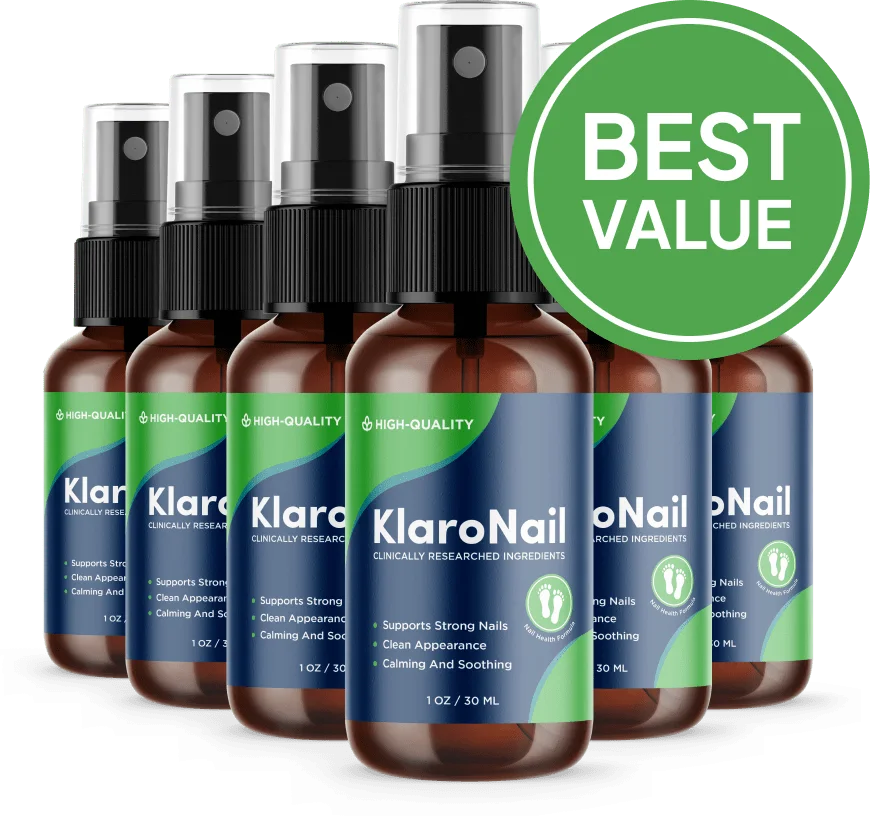
The formula in full
All seventeen ingredients transcribed from the printed label, with the four the sales page omits marked.
Order NowFrequently asked questions
Is manuka oil the same as tea tree oil?
No, though they are relatives. Both come from plants in the myrtle family and both are steam-distilled from foliage, but they are different species with different chemistry — tea tree from Melaleuca alternifolia in Australia, manuka from Leptospermum scoparium in New Zealand.
Which KlaroNail ingredients are allergens?
Sweet almond oil and walnut oil are both tree-nut derived. Several of the essential oils — tea tree, clove bud, lavender, lemongrass — are also recognised contact sensitisers for some people. The product carries no allergen statement of any kind.
Is manuka oil the same as manuka honey in Klaro Nail?
No. The label lists manuka oil, which is steam-distilled from the leaves and twigs of the manuka tree. Manuka honey is a bee product made from the nectar of the same plant.