Undecylenic Acid 5%: The KlaroNail Label Number
The short version
Undecylenic acid 5% is the amount printed on the KlaroNail label, and it is the first ingredient listed. Undecylenic acid is an eleven-carbon fatty acid made industrially from castor oil. KlaroNail is sold as a topical spray, so the 5% describes its concentration.
- The molecule is 10-undecenoic acid, cracked out of the ricinoleic acid in castor oil.
- 5% is printed on the KlaroNail label. It is the only amount on the label or the page.
- First position plus a 5% figure agree with the cosmetic labelling rules — the rest of the panel proves nothing.
- No Drug Facts panel means no drug claim — for the vendor, and for us.
The molecule, and where it comes from
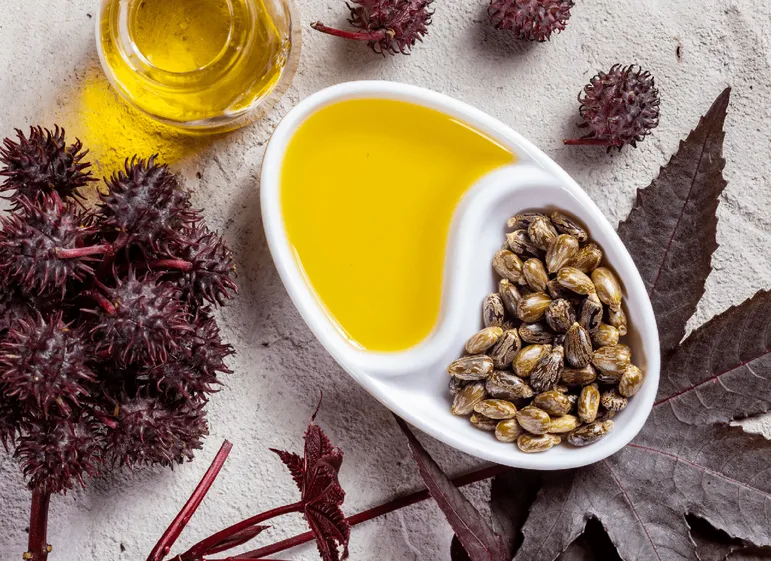
Undecylenic acid — 10-undecenoic acid, to give it its systematic name — is a fatty acid with an eleven-carbon chain and a double bond at the far end of it. Almost all of the commercial supply is made from castor oil. Castor oil is unusual among vegetable oils in being roughly ninety per cent ricinoleic acid, and when ricinoleic acid is heated hard enough it cracks into two useful pieces: heptanal, which goes to the fragrance industry, and undecylenic acid, which goes into personal-care and pharmaceutical manufacturing.
That is why the photograph KlaroNail's sales page uses for this ingredient is a bowl of castor beans and a dish of yellow oil rather than anything to do with nails. It is a genuinely accurate illustration, which is more than can be said for the honey jar the same page uses for manuka — an ingredient the printed label calls Manuka (Leptospermum scoparium Oil).
It is also worth being precise about one thing the “natural ingredients” framing obscures: undecylenic acid USP is a processed derivative. It is made from a plant oil, by thermal cracking and distillation. That is ordinary industrial chemistry and there is nothing wrong with it — but it is not the same thing as a botanical extract, and a page that leads with a castor-bean photograph is inviting you to read it as one.
Why the label says 5% and the page says nothing
The KlaroNail sales page names thirteen ingredients and gives an amount for none of them. The printed bottle label names seventeen and gives an amount for one: Undecylenic Acid USP (5%), listed first.
Position and percentage agree, which is a small mark in the label's favour. Under US cosmetic labelling rules an ingredient declaration lists ingredients in descending order of predominance down to one per cent; below that threshold, ingredients may be listed in any order. An ingredient printed at 5% and placed first is exactly where the rules would put it.
The rest of the panel is where the information stops. Sixteen ingredients follow with no figure beside any of them, and because the sub-one-per-cent tail can be listed in any order, the label cannot even tell you which of them are formulated at a meaningful level and which are present in trace amounts. On a topical product that is a significant limit. A named ingredient at a trace level behaves, on your skin, exactly like an ingredient that is not there.
What sits underneath the 5%
There is one more thing the ordering rule gives you free, and it is the reason the label matters more than the marketing page here. The second entry on the printed declaration is Mineral Oil — which means it, too, is above the one per cent line, and is very probably the largest single component of the bottle after the undecylenic acid.
Mineral oil is a highly refined petroleum distillate. On its own merits it is a sensible choice for this format: it is stable, it does not oxidise the way plant oils do, it spreads thinly, and it will not go rancid sitting in a bathroom for six months. As the carrier for a fine-mist spray it is doing real work.
Two things follow that you would never learn from the sales page. First, Mineral Oil is one of four ingredients — with Canola, Jojoba and Lemongrass — that appear on the bottle and nowhere on the page at all. Second, its presence at position two is not compatible with the “100% natural ingredients” badge the page displays, and neither is the canola oil further down nor the tocopheryl acetate, which is a synthetic ester of vitamin E rather than the vitamin itself. That is why the badge is not reproduced on this site: it is a claim the product's own packaging contradicts.
The line we will not cross, and why
Undecylenic acid has a long history in over-the-counter topical antifungal products in the United States, and it appears in the FDA's monograph system for that category. This is precisely where affiliate pages go wrong. It is very easy to write “clinically proven antifungal” over a product like this and feel justified, because the ingredient really is recognised.
But recognition attaches to a labelled drug, not to a molecule floating free. A product that is marketed as an over-the-counter antifungal has to say so on the outside: a Drug Facts panel, the active ingredient and its strength stated in the prescribed format, an indication drawn from the monograph, and the associated warnings. KlaroNail carries none of that. It prints a cosmetic-style ingredient declaration, three appearance claims — Supports Strong Nails, Clean Appearance, Calming And Soothing — and, under the wordmark, Clinically Researched Ingredients. Worth saying plainly, because it cuts both ways: the bottle carries no FDA disclaimer either. The “not intended to diagnose, treat, cure or prevent any disease” sentence is in the footer of the vendor's website, not on the packaging, so the label prints neither the drug panel nor the cosmetic hedge.
So the honest position is narrow and we are going to hold it. KlaroNail contains undecylenic acid at a printed 5%. Undecylenic acid is a well-known ingredient in nail-care products. KlaroNail is not an antifungal medicine, is not FDA-approved, and is not a treatment for onychomycosis or for anything else, and no wording on this site will suggest otherwise.
What you still cannot work out
Even taking the 5% at face value, three things stay unknown, and none of them is exotic:
- How much you apply. The directions ask for four applications a day but give no spray count per application, and the pump's delivery per actuation is not published.
- How long a bottle lasts. Thirty millilitres at an unstated rate is an unanswerable sum. The only duration figures anywhere are the vendor's tier labels, which imply thirty days a bottle on the 3- and 6-bottle orders and contradict themselves on the 2-bottle one.
- What the other sixteen are at. Which is the question worth putting to the store in writing before a six-bottle order.
The practical version
If you are assessing any direct-to-consumer topical, the sequence is short and it works on every product in this category. Find a legible photograph of the actual printed panel rather than the page's ingredient carousel. Count the entries and compare that count with the page. Check whether the first two or three ingredients are consistent with any percentage the brand advertises. Then read the badges against the panel, in that order — because a badge is a claim and a panel is a declaration, and only one of the two has rules attached to it.
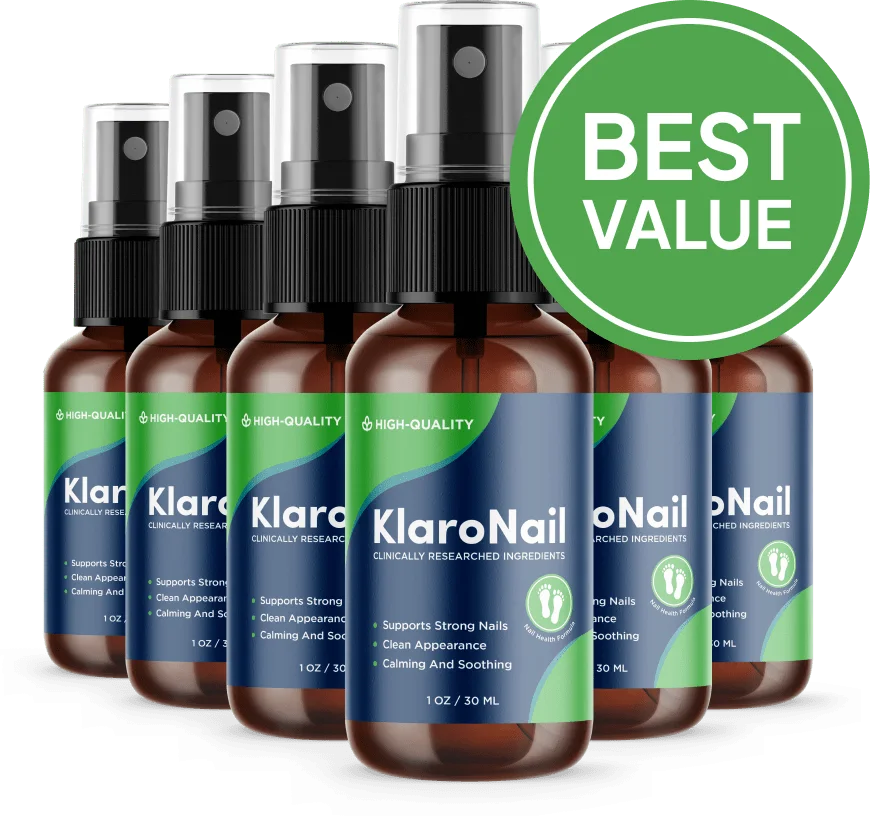
The bottle this article is about
One printed amount, sixteen unquantified oils, four applications a day.
Order NowFrequently asked questions
What is undecylenic acid made from?
It is produced by heating ricinoleic acid, the dominant fatty acid in castor oil, until it cracks into undecylenic acid and heptanal. The castor plant is the commercial starting point, which is why the vendor illustrates it with castor beans.
Is 5% undecylenic acid a drug strength?
That is the wrong question for this product. Concentration alone does not make something a drug: what does is how it is labelled and what it claims. KlaroNail carries no Drug Facts panel and makes no drug claim on its packaging, so it is presented as a cosmetic regardless of what is in it.
Do the other sixteen ingredients have amounts?
No. Not on the label, not on the sales page and not in the vendor's FAQ. Undecylenic Acid USP at 5% is the only quantity printed anywhere on this product, which is why every other row of our ingredient table reads “not disclosed”.
Where does the 5% undecylenic acid sit on the KlaroNail label?
Undecylenic acid is listed first on the KlaroNail label, and 5% is the only amount printed on the label or the page. It is made from castor oil.