Toenail Fungus Timeline: What to Expect
How long is the toenail fungus treatment timeline?
The toenail fungus timeline runs in months, not weeks, because a toenail grows only about a millimetre a month. With a topical, the first visible change often appears around three to four months as clear nail emerges at the base. Daily consistent care over twelve to eighteen months may be needed for a big toenail to grow out fully.
- Toenails grow roughly 1 mm a month, so the old damaged nail can only be replaced slowly.
- First clear nail at the base is the early win to watch for, often around months 3–4.
- If nothing at all has changed after 8–12 weeks of consistent use, reassess with a clinician.
More topical routines fail from impatience than from any flaw in the bottle. Someone starts a spray, checks the nail every few days, sees the same yellow thickness they started with, and quietly concludes it is not working. The problem is that they are measuring the wrong thing on the wrong clock. A realistic toenail fungus treatment timeline is the single most useful thing you can read before you begin, because it tells you what “working” actually looks like and when.
The short version is that you are not repairing the nail you can see. That nail is finished keratin; it will not un-thicken, un-lift or change colour. What you are really doing is waiting for a new, clear nail to grow in from the base and push the old damage forward until you can trim it off. That process is slow and it is governed almost entirely by how fast your nail grows. Understand that, and the whole timeline suddenly makes sense.
Why the toenail fungus treatment timeline is measured in months, not weeks
A fingernail grows around two to three millimetres a month; a toenail grows roughly half that, about one millimetre a month, and the big toenail is the slowest of the lot. A full big toenail is somewhere between fifteen and twenty millimetres from cuticle to tip. Do the arithmetic and you get the number that governs everything: twelve to eighteen months for a big toenail to completely replace itself, base to tip.
That is why weeks are the wrong unit. Four weeks of perfect application buys you about one millimetre of new nail at the very base — real, but almost invisible next to a nail that is fifteen millimetres long and discoloured along most of it. The change is genuinely happening; it is just happening at the speed of biology, and biology here is measured with a calendar, not a stopwatch.
Several things slow the clock further. Growth naturally slows with age. Reduced circulation to the feet, cold weather and certain health conditions all drag toward the slower end of the range. And the thicker and more damaged the nail is to start with, the longer the visible payoff takes. If your nails are severely thickened, our guide to the causes of thick, discolored toenails and what actually helps is worth reading alongside this one.
The toenail fungus treatment timeline, month by month
Here is a realistic month-by-month map for a topical routine applied consistently. Treat it as a guide to expectations, not a promise — everyone's nails grow at their own pace.
- Weeks 0–4 (month one): nothing visible, and that is normal. This month is about building the habit, not seeing results. You are laying down roughly one millimetre of new nail hidden under the cuticle. Judge yourself on consistency, not appearance.
- Months 1–3: still mostly the old nail. The affected nail looks much as it did. If you look very closely at the base you may notice the newest growth coming in with better texture or colour, but do not expect an obvious change yet. This is the stretch where most people quit, and quitting here wastes the months already invested.
- Months 3–4: the first visible improvement. With a topical such as one built on undecylenic acid, this is where many people first see a clear, healthier band of nail at the base — a strip of normal-looking nail with the old damage ahead of it. It is small, and it is the most encouraging thing you will see, because it proves the pipeline is working.
- Months 4–8: the clear band grows outward. That healthy strip advances toward the tip, roughly a millimetre a month, while you keep trimming the old growth off the front. Smaller toenails, which are shorter, can look close to normal in this window.
- Months 6–12: the smaller nails finish; the big toe is well underway. Because they have less distance to cover, the little toes often clear first and can look fully normal here, while the big toenail is perhaps half replaced.
- Months 12–18: complete clearance of the big toenail is possible. Once clear nail has grown all the way from base to tip and the last of the old growth is trimmed away, the nail looks normal. This is the finish line, and it is why the whole project is best measured in seasons.
Applied badly, even this timeline stalls. If you are unsure your routine is giving the product a fair chance, our step-by-step guide to applying a nail fungus spray the right way covers the prep and coverage that make the months above actually count.
What “cure rates” really tell you
It is worth being honest about the numbers, because the sales pages usually are not. In clinical trials, topical treatments for nail fungus produce modest complete-cure rates — often under twenty per cent at six months, even for prescription products, and higher only over longer periods. Oral medications generally clear more nails but carry their own considerations and are a conversation for a doctor.
Two things follow. First, six months is an interim checkpoint, not the finish line; the honest numbers improve with more time precisely because the nail needs more time to grow out. Second, and this matters here: KlaroNail is a cosmetic nail and cuticle spray, not a drug, and it is not FDA-approved to treat or cure onychomycosis or anything else. Those trial figures describe the general difficulty of the problem and the behaviour of ingredients; they are not a claim about what this cosmetic will do for you. We keep that line clearly drawn, and so should any page you trust.
Match your supply to the timeline
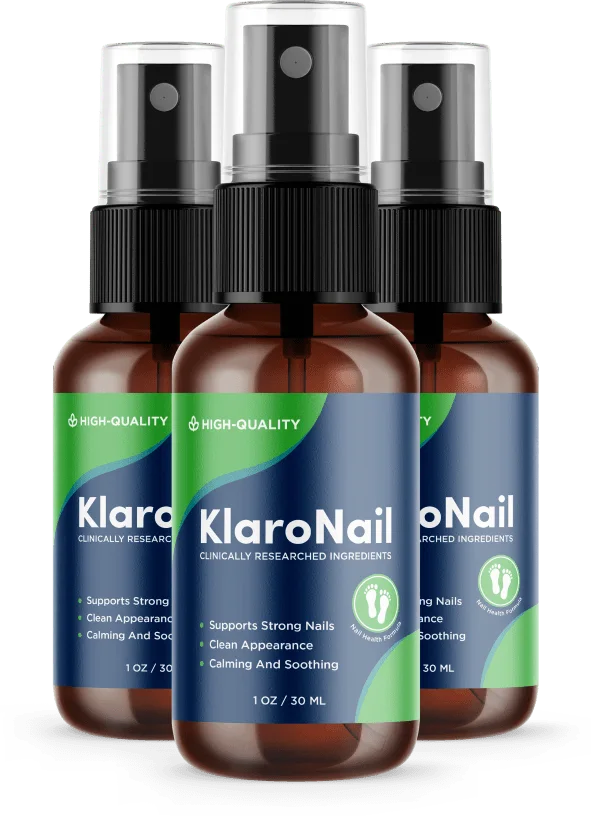
Because visible change is a months-long project, buying enough KlaroNail to cover the stretch is how a topical routine survives to the payoff — with free US shipping and a 60-day money-back guarantee.
Order NowWhen to keep going — and when to stop
Patience is the theme of this article, but patience is not the same as ignoring your feet. There is a real difference between “slow” and “not working,” and you set a checkpoint to tell them apart.
The checkpoint is roughly eight to twelve weeks of genuinely consistent use. By then you should see some sign of new, clearer nail at the base, even if it is small. If there is truly nothing — no new clear growth, no change of any kind after a fair, consistent trial — that is the point to stop guessing and speak to a clinician. A doctor can confirm whether it is actually fungus (plenty of thick, discoloured nails are not), and can discuss prescription topicals or oral treatment that a cosmetic spray is not a substitute for.
Some signs mean see someone sooner, not later: increasing pain, redness or swelling spreading into the skin, any drainage, or nail problems if you are diabetic or have poor circulation. Those are not “wait and watch” situations, and no topical routine should delay proper care.
Objections and myths
“It has been a month with no change, so it failed.” A month is one millimetre. You are judging a fifteen-millimetre nail on four per cent of its length, all of it hidden at the base. This is the most common false alarm in the whole timeline.
“The old nail should start looking better.” It will not. The visible damage is permanent keratin. Progress shows only as new nail behind it, never as the old nail improving. Track the base, not the tip.
“If it is this slow, nothing works.” Slow is the nature of the target, not a verdict on any product. Even the strongest options are bound by the same one-millimetre-a-month growth rate. The winning strategy is not a faster miracle; it is consistency long enough for new nail to finish the job.
Where KlaroNail fits
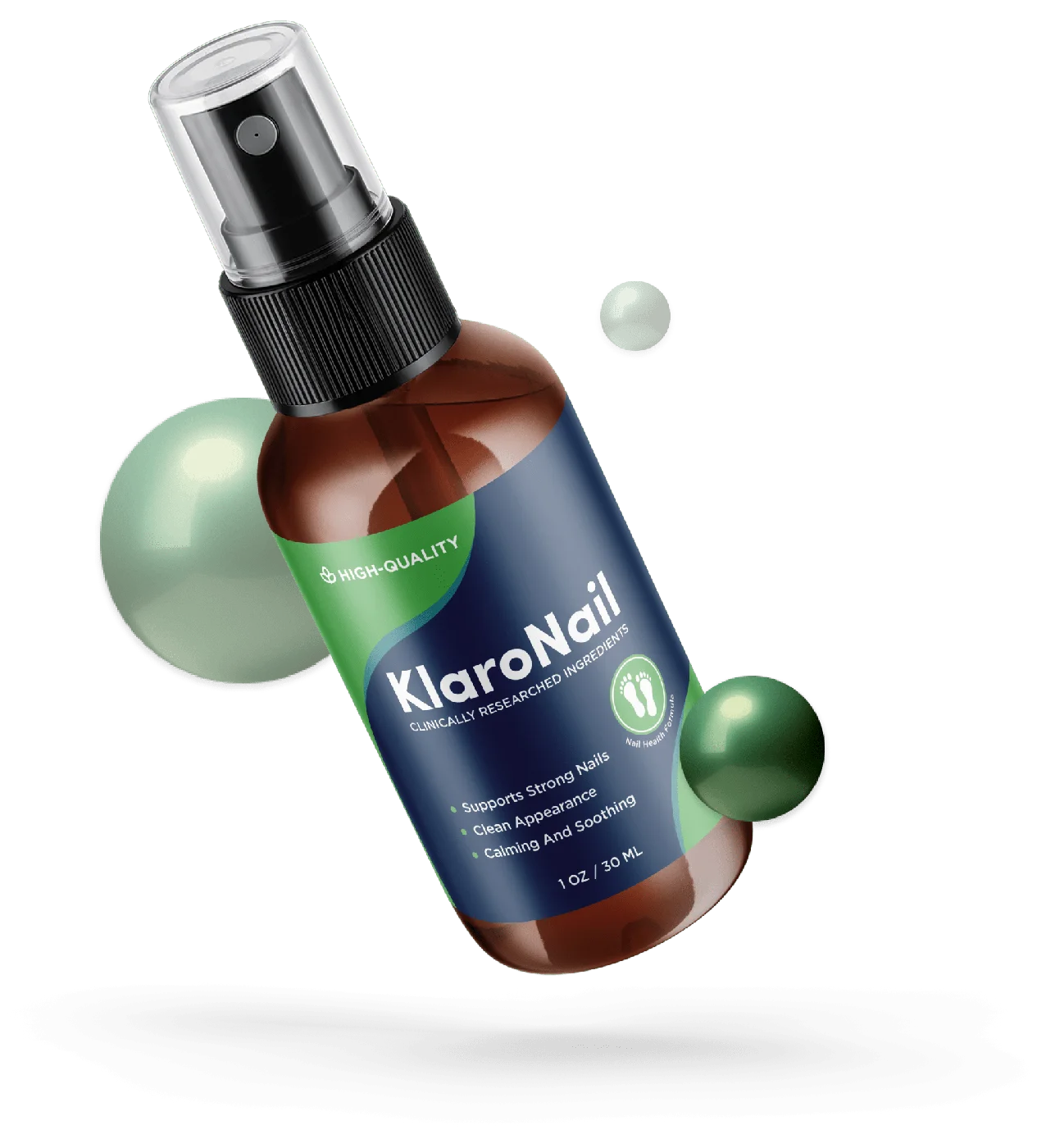
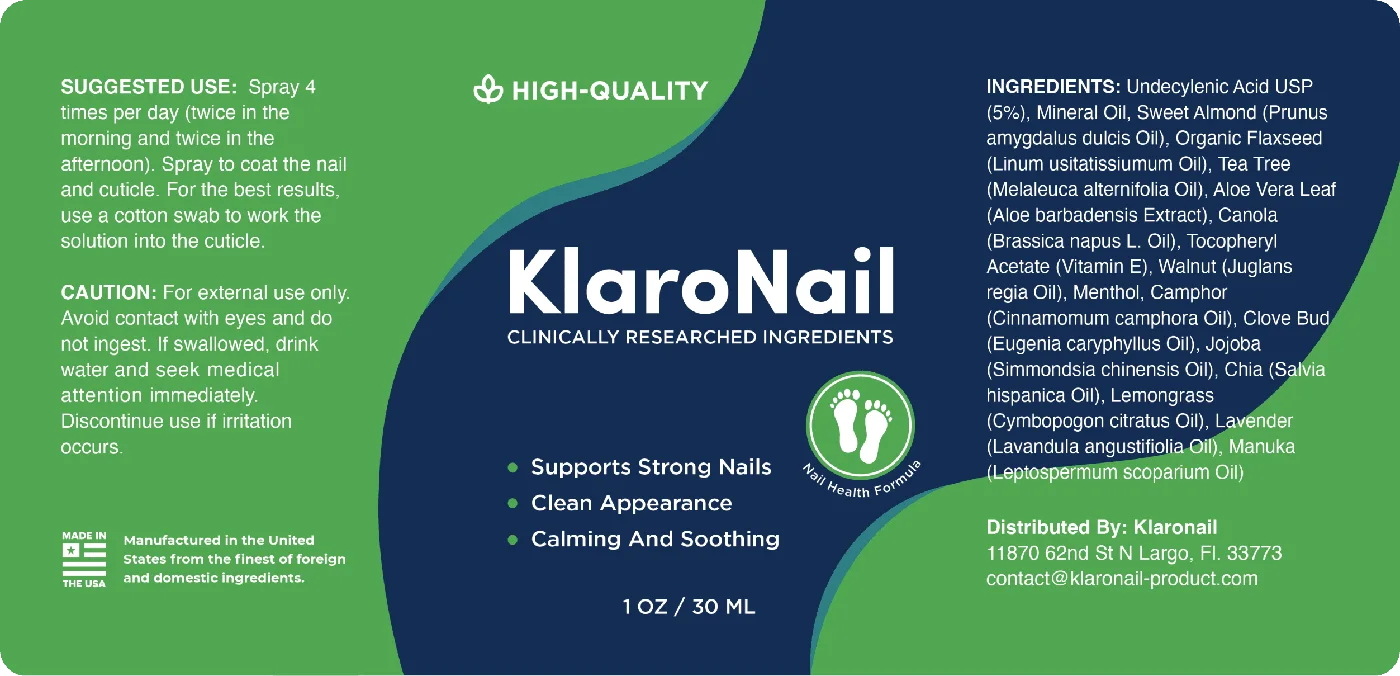
KlaroNail is a topical nail and cuticle spray whose label leads with undecylenic acid at 5% — a castor-derived fatty acid with a long history in nail-care products — alongside carrier oils and botanicals such as tea tree, manuka and clove bud. It is positioned as a cosmetic supporting the appearance of strong, clean nails, applied four times a day. It is not a medicine and not a cure, and the honest way to use it is exactly the way this timeline describes: apply it well, apply it daily, and give new nail the months it needs to grow in. If you want the fuller assessment first, see our KlaroNail review of whether the spray actually works.
Frequently asked questions
How long does it take to cure toenail fungus?
Longer than most people expect. Because a toenail grows only about a millimetre a month, a big toenail can take 12 to 18 months to fully grow out and replace the damaged part. The first visible improvement with a topical often appears around 3 to 4 months, but complete clearance means the whole nail has regrown clear, which is why the timeline is measured in seasons rather than weeks.
Why is my toenail fungus taking so long to clear?
Because you are not fixing the old nail — you are waiting for a new one. The visible nail is already made and cannot un-thicken or un-discolour; it can only be replaced by clear nail growing in from the base at roughly a millimetre a month. Thick nails, older age and slower circulation all push growth toward the slow end, which stretches the timeline further.
When should I give up on a topical treatment?
Do not confuse slow with useless, but do set a checkpoint. If you have applied a topical consistently for 8 to 12 weeks and see no new clear nail at the base and no change at all, that is the point to reassess and speak to a clinician about options such as prescription topicals or oral treatment. Worsening pain, spreading, or drainage means see someone sooner.
Does the whole nail have to grow out to be cured?
Essentially yes. The damaged, discoloured portion does not recover; the nail looks cured only once clear new nail has grown all the way from the base to the tip and the old growth has been trimmed away. That is why smaller toenails often look normal months before the big toe does, and why patience is the hardest part of the whole process.
What is the first sign a toenail spray is going well?
The early sign to watch for is clear nail emerging at the base near the cuticle. This often appears around three to four months, since toenails grow roughly 1 mm a month.

Commit to the full stretch
A big-toe timeline can run a year or more, so a multi-bottle KlaroNail order is the sensible way to see it through — free US shipping and a 60-day money-back guarantee.
Order NowReferences
Related reading
KlaroNail Review: Does This Nail & Cuticle Spray Actually Work?
What the label supports, what it does not, and how to judge results honestly.
How to Apply Nail Fungus Spray the Right Way
The prep and three-zone coverage that make every month of the timeline count.

Tea Tree Oil for Toenail Fungus: Does It Work?
The honest trial numbers on a key KlaroNail botanical, and safe-use notes.
Thick, Discolored Toenails: Causes and What Actually Helps
Fungus is one cause among several — how to tell them apart and what to do.