KlaroNail vs Funginix: Two Undecylenic Acid Products Compared
KlaroNail vs Funginix: which undecylenic-acid product should you choose?
KlaroNail vs Funginix is a comparison of two products that share one active ingredient, undecylenic acid, so the choice is about strength, format and routine. Funginix prints 10% and brushes on. KlaroNail prints 5%, adds tea tree and manuka oil, and sprays on four times a day. Pick the routine you will actually keep.
- Funginix: 10% undecylenic acid, brush-on gel with botanical support.
- KlaroNail: 5% undecylenic acid plus 16 more ingredients, fine-mist pump, 4 sprays a day.
- Undecylenic acid is a slow, months-long ingredient; neither product may claim to cure.
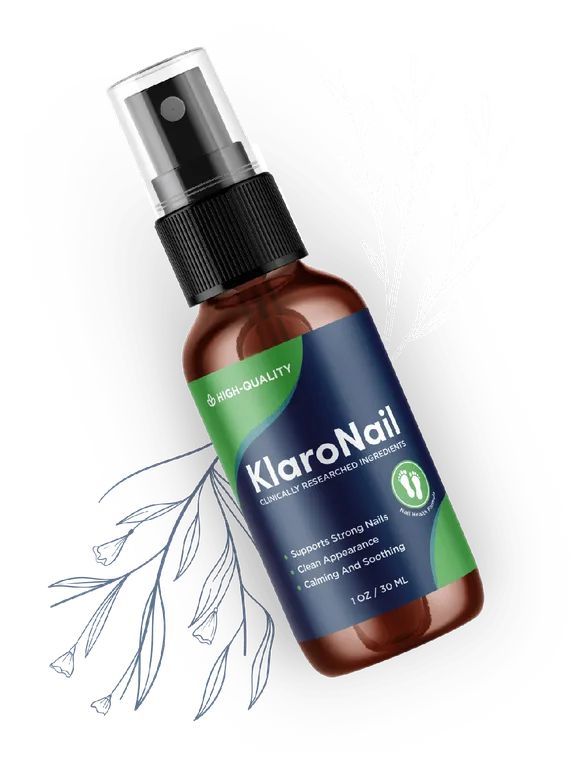
Comparing KlaroNail vs Funginix is more interesting than the usual nail-product face-off, because for once the two contenders are not built on different ideas. They are built on the same one: undecylenic acid, the castor-derived fatty acid with a long history in over-the-counter topical antifungal products. That shared foundation strips the argument down to three things that actually differ — how much of the acid each carries, how it gets onto your nail, and what the daily routine demands of you. Get those three straight and the choice makes itself.
KlaroNail vs Funginix at a glance
| KlaroNail | Funginix | |
|---|---|---|
| Active idea | Undecylenic acid | Undecylenic acid |
| Printed concentration | 5% | 10% |
| Format | Fine-mist pump spray | Brush-on liquid/gel |
| Botanical support | Tea tree, manuka oil and more (17 listed) | Botanical blend |
| Routine | 4 applications a day | Typically twice daily |
| Coverage control | Fast, even mist; less precise at the edge | Precise, paint-on placement |
| Speed of use | Seconds; no drying wait to reapply | Slower; brush and dry |
| Legal category | Cosmetic (no Drug Facts panel) | OTC-style antifungal presentation |
| Realistic first change | 3–4 months | 3–4 months |
The concentration question: does 10% beat 5%?
On paper, Funginix carries twice the undecylenic acid: 10% against the 5% printed on the KlaroNail label. It is tempting to stop there and declare a winner, and if all else were equal the higher figure would be the stronger delivery of the active. But all else is rarely equal, and concentration is only the first of several inputs that decide what actually reaches the nail.
Two things complicate the tidy “10 beats 5” story. First, on KlaroNail that 5% is the only printed amount — we cover why that single number matters so much in our piece on undecylenic acid at 5%, the only amount KlaroNail prints — which means everything else in the formula, including the tea tree and manuka oil, is unquantified. You know exactly how much acid you are getting and very little about the rest. Second, a higher concentration you apply unevenly or abandon after a month will underperform a lower concentration you apply well and stick with for a year. In a slow, adherence-driven category, the percentage on the box is a headline, not the whole story. It is a real point in Funginix's favour — just not the decisive one it looks like.
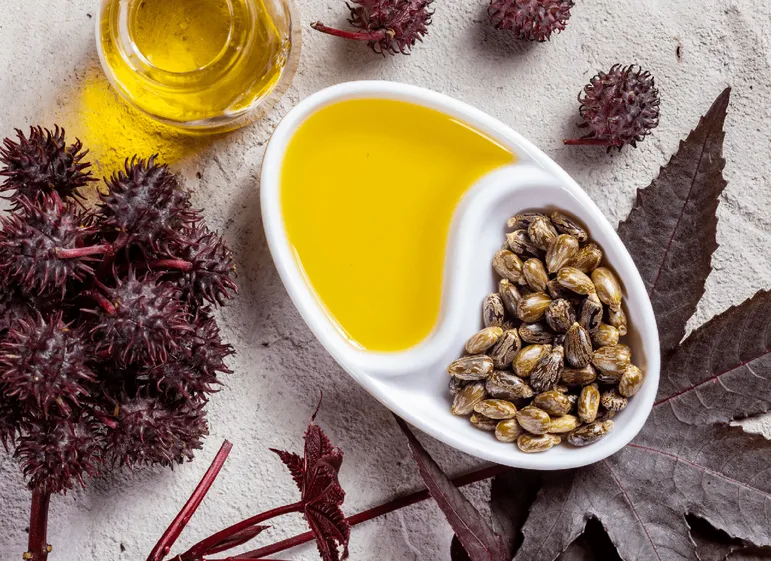
There is a second reason the number alone can mislead, and it is chemistry rather than marketing. Undecylenic acid does not work in a vacuum; it has to get from the surface of a hard, dense nail plate toward where it can do anything useful, and that journey depends on the carrier and the penetration enhancers around it far more than on the headline percentage. A 10% active in a formula that beads up and sits on top of the nail can deliver less than a 5% active in a carrier that spreads thin and clings. KlaroNail's mineral-oil base is built to spread and stay put; Funginix leans on its own botanical and penetrant blend. Without head-to-head penetration data — which neither vendor publishes — the honest position is that the concentration gap is real but its real-world size is unknown, and it is smaller than the raw “10 versus 5” makes it look.
Spray-and-go versus brush-on
This is where the two genuinely diverge, and for most people it matters more than the five percentage points. Funginix is a brush-on. You paint it precisely onto the nail and work it into the edges and, as far as possible, under the free edge — more control, better targeting of a specific problem nail, and a slower ritual that involves drying time. KlaroNail is a fine-mist spray: you pump it over the nail and cuticle in seconds, four times a day, with no brush to clean and no waiting around to reapply. Less precision at the very edge, far less friction.
Which is “better” depends entirely on which one you will still be doing in month four. The dirty secret of every topical nail product is that the single biggest predictor of a result is not the formula — it is whether the person kept using it. A brush-on that feels like a chore gets skipped; a spray that takes ten seconds gets done. If you are disciplined and want maximum placement control, the brush wins. If you know yourself and know that “easy” is what keeps you consistent, the spray wins. Either way, technique matters, and our guide to applying a nail fungus spray correctly — filing back the surface, drying thoroughly, covering the whole plate and the skin around it — closes a lot of the coverage gap the mist gives up to the brush.
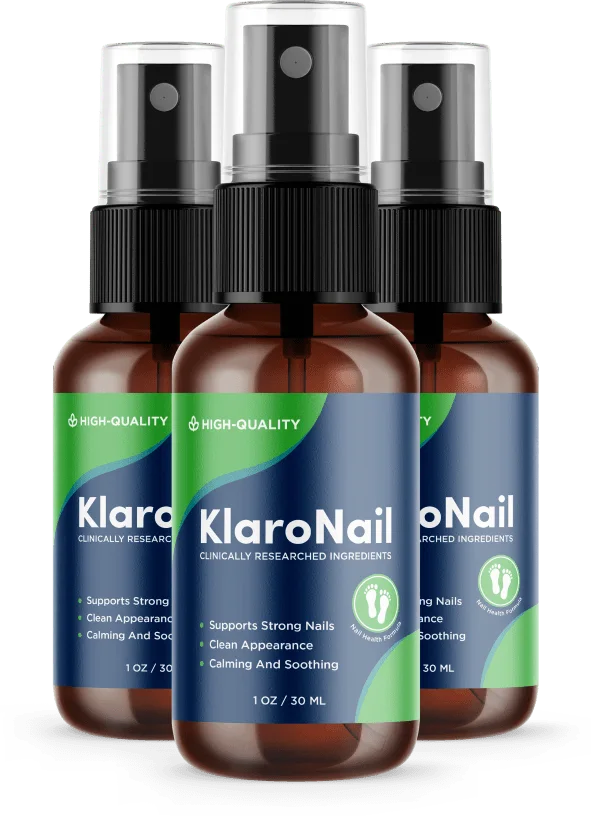
If spray-and-go is the routine you'll keep
KlaroNail's fine-mist format is built for four fast applications a day. The official store has current multi-bottle pricing and a 60-day money-back guarantee.
Check KlaroNail Pricing & GuaranteeWhat undecylenic acid can and cannot do
Because both products share the active, it is worth being precise and honest about the ingredient itself, separate from either brand. Used as a labelled over-the-counter antifungal, undecylenic acid has a modest, real track record: studies suggest it improves roughly 40–60% of mild-to-moderate cases over six to twelve months of consistent use, with the first improvement typically appearing around three to four months in. Those are not miracle numbers, and they are not meant to be. They describe a slow, moderate ingredient that helps some people some of the time when used properly and patiently.
Two honesty notes attach to that. First, those figures describe the ingredient as an active in trials, not a promise about any specific bottle you buy — and KlaroNail in particular is sold as a cosmetic, without a Drug Facts panel, so it makes no clearance claim at all. Second, and it bears repeating because the whole category blurs this line: no over-the-counter product, at 5% or 10% or any other number, may legally claim to cure onychomycosis through the nail plate. A stubborn or spreading infection is a reason to see a doctor or podiatrist, who can confirm whether it is even fungal and, if it is, prescribe an oral or medical-grade option that outperforms anything on a shop shelf. For the honest fuller picture on the KlaroNail side of that, see our label-first KlaroNail review.
How long you actually use them
Neither product is a two-week job, and any version of this comparison that implies otherwise is setting you up to quit early and blame the wrong thing. Because a nail can only look clear as new growth pushes the damaged plate out, both KlaroNail and Funginix are measured in months: first signs at three to four months, a meaningful verdict at six, and a full grow-out of a big toenail at twelve to eighteen months. That reality should shape how you buy. A single small unit of either product will not carry you through a real trial, which is why KlaroNail is sold in multi-bottle supplies — you are buying the run, not a sample. Budget for the timeline up front and you are far more likely to give whichever product you choose the fair shot it needs.
Cost over a full course, not per bottle
Because both products are measured in months, the only fair way to compare their cost is across a complete course rather than by the price of a single unit. A brush-on used twice a day and a spray used four times a day will each burn through product at their own rate, and a bottle or tube that looks cheaper on the shelf can end up costing more over a six-month run if it empties faster or you have to buy it repeatedly at full retail. KlaroNail's multi-bottle supplies exist precisely to price the whole timeline in one go, usually at a lower per-bottle rate than buying one at a time, and with the 60-day money-back guarantee attached — though remember that window closes before the results window really opens, so the guarantee protects “I changed my mind” far better than “it didn't clear my nail.” Whichever product you choose, budget for the full course up front. The most expensive nail product is the one you buy in a quantity too small to finish the job, quit halfway, and replace with something else you also under-buy.
The verdict
If your deciding factor is raw printed concentration and precise placement, and you are the kind of person who will happily brush a product on twice a day for a year, Funginix and its 10% undecylenic acid is a sound pick. If your deciding factor is friction — a ten-second mist you will actually repeat four times a day, backed by tea tree, manuka oil and a mineral-oil carrier that keeps the nail and cuticle conditioned — KlaroNail is the easier routine to sustain, and sustained is what wins in this category. There is no universally “stronger” answer, only the product whose routine survives contact with your real life. Choose that one, buy enough to run the full timeline, and confirm the diagnosis first if there is any doubt about what you are treating.

Ready to commit to the spray?
Buy KlaroNail from the official store, where the multi-bottle pricing and the 60-day money-back guarantee actually apply.
Order KlaroNail From The Official StoreFrequently asked questions
Is KlaroNail or Funginix stronger?
On the printed number, Funginix is stronger: it lists undecylenic acid at 10%, while the KlaroNail label prints 5%. But concentration is only one input. Delivery, how evenly you cover the nail, and whether you keep up the routine for months all shape the real-world result, so a higher percentage on the box does not automatically mean a better outcome for you.
What percentage of undecylenic acid does KlaroNail have?
The KlaroNail label prints undecylenic acid USP at 5%. It is the only ingredient with a stated amount anywhere on the bottle or the store page; the other sixteen ingredients, including tea tree and manuka oil, carry no printed percentages.
Is a spray or brush-on better for toenail fungus?
Neither is inherently better; they trade different strengths. A fine-mist spray like KlaroNail is fast and easy to keep up four times a day, which helps adherence. A brush-on like Funginix gives you more control to paint product precisely onto and under the nail edge. The best format is the one you will actually use consistently for months.
How long do you use Funginix or KlaroNail?
Plan on months, not weeks. Undecylenic acid typically shows first improvement at three to four months and needs six to twelve months of consistent use to work through mild-to-moderate cases, because a nail only clears as new growth replaces the old plate. Both products are long-run commitments, not quick fixes.
Which is easier to use, KlaroNail or Funginix?
KlaroNail is a spray used four times a day, while Funginix is a brush-on gel. Pick the format that fits the routine you will actually keep.
Related reading
KlaroNail vs Kerasal: Which Nail Fix Is Better?
An antifungal-botanical spray against a cosmetic renewal gel — two different jobs entirely.
Undecylenic Acid at 5%: The Only Number KlaroNail Prints
What the shared active is, where it comes from, and why the printed percentage is not the whole story.
Best Toenail Fungus Spray 2026
How the leading sprays compare on ingredient, format and honesty of claims.

How to Apply a Nail Fungus Spray Correctly
Filing, drying and coverage — the routine that closes the gap between a mist and a brush.