Best Toenail Fungus Spray 2026: What to Look For
What is the best toenail fungus spray in 2026?
The best toenail fungus spray is the one that fits your routine, and the strongest picks share three traits. They have a recognised active such as undecylenic acid or tolnaftate, a spray format that reaches the nail edges, and clear guidance that topicals suit early, surface-level cases. Match those traits to your situation.
- Look for monograph actives: undecylenic acid or tolnaftate, not just a scent of tea tree.
- Sprays win on hard-to-reach edges and nail folds; that is their real advantage.
- Topicals struggle to cross the nail plate, so early cases respond best.
Why "best" is the wrong question — and the better one to ask
Search for the best toenail fungus spray and you will find a dozen ranked lists that all disagree, because "best" is doing too much work. A spray that suits an early, cosmetic nail concern is the wrong tool for a thick, painful, half-detached nail — and no ranking can know which one you have. The useful question is not "which spray wins?" but "which traits actually matter, and which does my situation need?" This guide answers that, then shows where KlaroNail sits among the honest options rather than crowning it.
One ground rule first, because it is where most buying guides quietly mislead. Fungal nail infection — onychomycosis — is a medical condition. A cosmetic spray is not a cure for it, and any page that tells you otherwise is over-claiming. What a good topical can reasonably do is support the appearance of the nail and the health of the surrounding skin, and give an early, surface-level problem the best shot a non-prescription product has. Keep that frame and every other decision gets clearer.
Trait one: a recognised active ingredient
The first thing that separates a serious spray from a scented oil is the active ingredient. In the United States, over-the-counter topical antifungal products are governed by an FDA monograph system, and two actives you will see named on genuinely functional products are undecylenic acid and tolnaftate. Fungi-Nail, for instance, uses 1% tolnaftate. Undecylenic acid — a fatty acid derived from castor oil — is the other long-standing name in this category.
Here is the nuance the ranking lists skip. An active ingredient only counts as a labelled antifungal when the product is marketed as a drug: a Drug Facts panel, the active and its strength stated in the prescribed format, and the monograph wording. Some products, KlaroNail included, contain undecylenic acid but are sold as cosmetics rather than drugs, without a Drug Facts panel. That is not a scandal, but it is a distinction worth understanding, and we walk through exactly what it means in our explainer on what undecylenic acid at 5% is and why the label position matters. The practical takeaway: look for a named, recognised active, and read whether the product presents it as a cosmetic ingredient or a drug active — the two are marketed under different rules.
Be sceptical of the opposite case, too: a spray whose entire pitch is "natural essential oils" with no recognised active named anywhere. Tea tree and the other botanicals have their place, but a fragrance is not an active ingredient, and a long list of oils with no amounts tells you very little about what the product can do.
Trait two: penetration — the honest ceiling on every topical
This is the trait that decides how well any topical, spray or otherwise, can perform, and it is the one marketing works hardest to blur. The nail plate is a dense, layered keratin barrier engineered by biology to keep things out. A fungal infection in true onychomycosis lives in and under that plate — in the nail bed beneath it. So the central problem for every topical is simple to state and hard to solve: the active has to get through the nail to reach the infection, and the nail is very good at not letting it.
Two consequences follow, and they are the honest heart of this guide. First, topical actives struggle to penetrate the nail plate, which is precisely why early, surface-level cases respond best — when the involvement is shallow and near the edges, a topical has a real chance; when it is established deep under a thickened nail, a topical is fighting uphill. Second, format matters because of this. A spray's advantage is reach: a fine mist gets into the nail folds, along the edges and around the cuticle where infections often start and where a brush tip skips. That is the genuine, defensible case for choosing a spray — not that it magically penetrates better through the plate, but that it covers the perimeter more completely.

Trait three: ease of daily use
The best active in the world does nothing sitting in a cabinet. Fungal nail concerns are a game of consistency measured in months, because results can only appear as fast as the nail grows out — roughly one millimetre a month. A product you will actually reach for four times a day beats a theoretically stronger one you abandon after two weeks.
This is where the spray format earns its keep for many people. No touching the affected nail with a shared applicator, no dropper mess, no bending down to paint one toe at a time — a few sprays across the nails and surrounding skin and you are done. KlaroNail follows this pattern: a fine-mist bottle used four applications a day, with a 1 OZ bottle lasting about a month at that rate. Whatever you choose, be honest about which routine you will keep, because adherence, not marketing, is what carries a topical to any result. Our guide to applying a nail spray correctly for the best chance of results covers prep, technique and how long to keep going.

A spray built for the daily routine
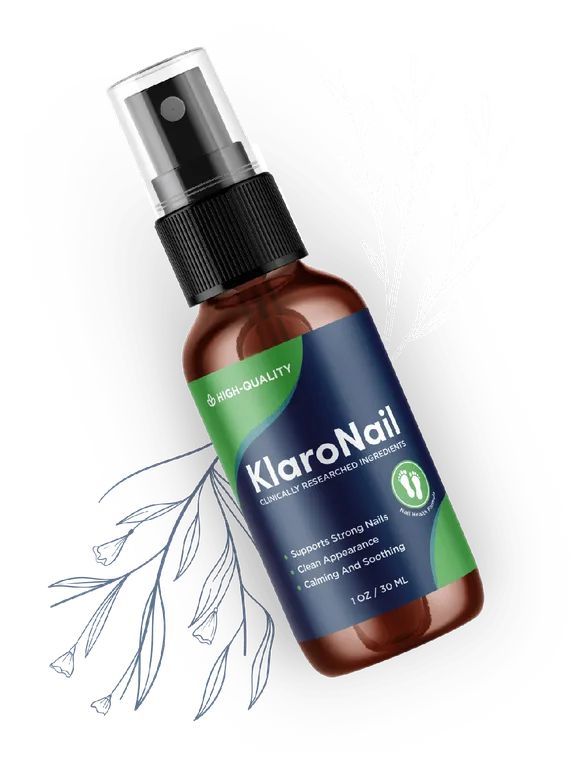
KlaroNail is a fine-mist nail and cuticle spray with undecylenic acid, tea tree and manuka oil — four easy applications a day.
See KlaroNail On The Official StoreWhere KlaroNail fits among the best toenail fungus spray options
Held against those three traits, KlaroNail is a reasonable candidate for the shortlist without being a miracle. It is a fine-mist spray, so it scores on reach and on ease of daily use. Its 17-ingredient formula is led by undecylenic acid — a recognised active — alongside tea tree, manuka and a stack of other botanical oils. Where honesty requires a caveat: it is sold as a cosmetic, not a labelled drug, and it is not FDA-approved and not a treatment for onychomycosis. It sits in the "support the appearance of the nail and surrounding skin, best on early cases" lane, which is where most non-prescription topicals honestly live.
If you want the deeper read on what the spray does and does not do, our independent KlaroNail review of whether it works goes further than a category guide can. And if you are comparing it against a specific rival, our head-to-heads on KlaroNail versus Funginix, both undecylenic-acid products are the natural next step.
Spray, pen or oral — matching the tool to the severity
The format debate only makes sense once you place it against how bad the problem is. Here is the honest map.
- Spray. Easiest for covering many nails and the surrounding skin at once, best perimeter reach, lowest-fuss routine. Strong first choice for early, surface-level or cosmetic concerns and for keeping healthy nails looking their best.
- Pen or brush. Places active precisely on a single problem nail with less overspray. Good when one nail is the issue and you want targeted, controlled application.
- Oral antifungal. A prescription such as terbinafine works from the inside out and is the most effective route for stubborn, established infections — but it requires a doctor, may need blood-test monitoring, and is not something a spray can or should replace.
- Laser and in-office options. Considered for advanced cases, usually after topicals have failed, and always via a professional.
Read down that list and the logic is clear: the milder and earlier the concern, the more sense a topical spray makes; the more advanced and entrenched it is, the more you need something a non-prescription product cannot deliver. Choosing a spray is not a failure to take the problem seriously — it is the right first move for the right stage. Knowing when you have passed that stage is the whole game, and it is the subject of our realistic toenail fungus treatment timeline.
Three myths worth clearing before you buy
Myth: "A stronger active fixes it faster." Concentration is not the bottleneck; penetration and time are. A higher percentage of an active that cannot cross the nail plate does not rescue a deep infection. This is why the honest guides emphasise early use and consistency over chasing the biggest number on the label.
Myth: "If it is natural, it is doing the work." Botanical oils can be pleasant and some have supportive properties, but a product that lists only oils and no recognised active, with no amounts, is telling you almost nothing about function. "Natural" is a marketing frame, not a mechanism.
Myth: "No change in three weeks means it failed." Nothing visible can happen faster than the nail grows, and healthy nail grows out over months. Three weeks is not a verdict; three to six months of consistent use is roughly the window in which you can fairly judge a topical — and if there is genuinely no change by then, that is your cue to see a professional.
When to skip the spray and see a doctor
A buying guide has to say this plainly. Put the spray down and book an appointment if the nail is thick, crumbling, painful, lifting away from the bed, or the discoloration is spreading; if you have diabetes, poor circulation or a weakened immune system; or if a topical has produced no change after a few months of honest, consistent use. A clinician can confirm whether it is even fungus — plenty of nail discoloration is not — and can offer oral terbinafine or laser options that no spray can match. Choosing a spray for an early concern is sensible; using one to avoid a doctor for an advanced one is not.
Your shortlist checklist
- Named active. Undecylenic acid or tolnaftate, stated clearly.
- Honest positioning. A brand that admits topicals work best early, and does not promise a cure.
- Format fit. A spray for reach and easy daily use across many nails.
- Realistic timeframe. Marketing that talks in months, not days.
- A guarantee. A money-back window so a fair trial costs you little if it is not for you.
Frequently asked questions
What is the best toenail fungus spray in 2026?
There is no single best toenail fungus spray for everyone. The strongest picks share three traits: a recognised monograph active such as undecylenic acid or tolnaftate, an easy spray format that reaches the nail edges, and a brand that is honest that topicals work best on early, surface-level cases. Match those traits to your situation rather than chasing a ranking.
Do nail fungus sprays actually penetrate the nail?
Only partly. The nail plate is a dense keratin barrier, so any topical struggles to reach an infection living underneath it. That is why sprays and solutions perform best on early, surface-level involvement and around the nail folds, and why established infections deep under a thick nail often need more than a topical can deliver.
Spray vs pen vs oral: which works best?
It depends on severity. A spray is easiest for covering many nails and the surrounding skin; a pen or brush places active precisely on one nail; an oral antifungal such as terbinafine works from the inside and is the most effective for stubborn, established infections but needs a doctor. For mild, early cosmetic concerns a topical is a reasonable first step; for anything advanced, see a professional.
When should I see a doctor instead of using a spray?
See a doctor if the nail is thick, crumbling, painful, lifting from the bed or spreading, if you have diabetes or poor circulation, or if a spray has produced no change after a few months of consistent use. A professional can confirm whether it is even fungus and can prescribe oral terbinafine or discuss laser options a spray cannot match.
What should I look for in a toenail spray?
Look for a named active such as undecylenic acid or tolnaftate, and a spray format that reaches the nail edges and folds. Choose one you can use every day.
References
Related reading
Put KlaroNail on your shortlist
A fine-mist nail and cuticle spray with a recognised active, an easy daily routine and a 60-day money-back guarantee on official orders.
Order KlaroNail From The Official Store